
Water, data and AI in Yerevan
Ten youth workers from Poland and Armenia spend six days teaching each other how water is managed on both sides, and turning it into workshop material for young people.
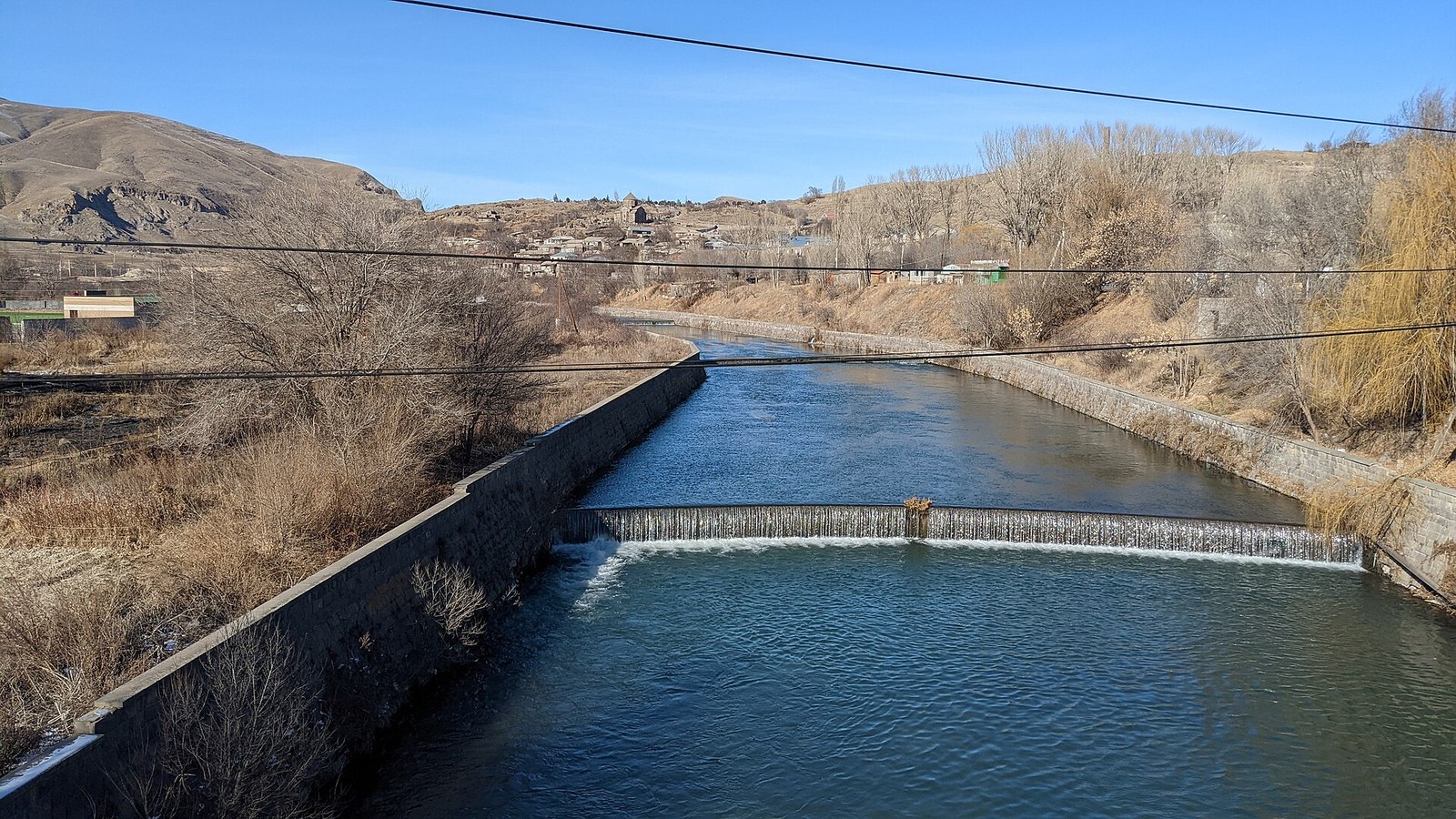
From 11 to 16 September ten youth workers from Poland and Armenia meet in Yerevan for Water Management, a six-day course on how data and artificial intelligence help stop water going to waste, and on how to turn that into work with young people. CSIN joins as a partner alongside the Armenian Institute of International and Security Affairs.
The course is built as an exchange, not a lecture. Both sides have practice in this, it simply grew out of different problems.
Silesia brings the experience of a post-industrial region that spent decades with too much water in the wrong places and now increasingly has too little. Mine water and river salinity, what happens when water becomes a waste product. Drought and urban retention, unsealing surfaces, rain gardens, holding rainwater where it fell. The circular economy applied to water, reuse instead of a single pass to the sewer. And the household scale, metering and leak detection, where daily habits actually show up in the numbers.
Armenia brings the practice of a country that has been living with shrinking resources for years. Managing water where agriculture is the largest user and every litre has a price. Canal and weir systems, maintaining old infrastructure, losses in the network. Drip irrigation and other techniques that in a dry climate are a necessity rather than a curiosity. Digital monitoring of consumption, drought forecasting and leak detection before a leak becomes a failure.
The second half of the course turns this into method. The activities we think are worth running in this field need no laboratory and no budget, but give young people a real tool: a water footprint calculated on their own data rather than read off a poster, mapping the water infrastructure of their own neighbourhood with a phone, open data and simple AI used to hunt anomalies in readings, a micro-audit of a school or a home followed by a campaign built on its result, and an exchange of findings between groups in two countries running the same measurements in different climates.
There is also the part AI does not settle. Water is a matter of decisions, money and neighbours, and that conversation belongs in the workshop too.
Photos
Water Management is a staff training run by Zielone Slaskie Social Cooperative under its Erasmus+ youth accreditation, with the Caucasian Social Innovation Network Foundation and the Armenian Institute of International and Security Affairs as partners. Funded by the European Union. Views and opinions expressed are however those of the author(s) only and do not necessarily reflect those of the European Union or the Foundation for the Development of the Education System (FRSE). Neither the European Union nor FRSE can be held responsible for them.